


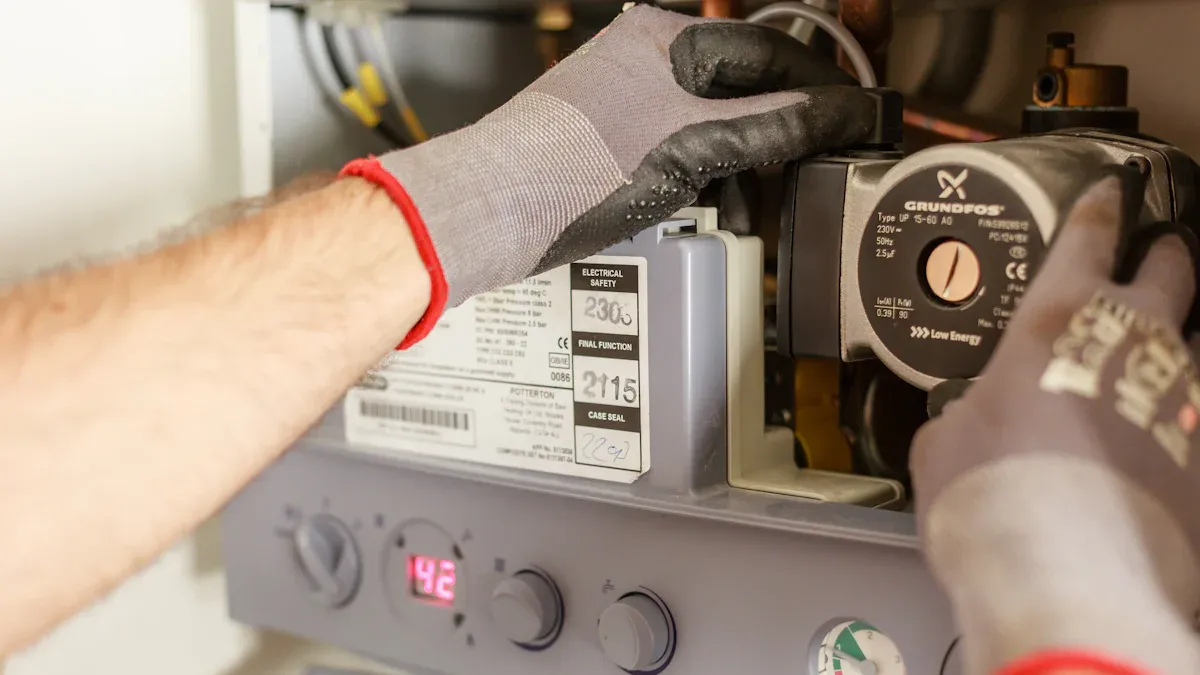
Mechanical Seals are crucial for preventing fluid leakage in pumps. Reliable sealing maintains pump efficiency, ensures safety, and protects the environment. Mechanical Seal Faces form the primary barrier. A Spring Mechanism ensures consistent contact. Effective Heat Dissipation in Pump Seals is vital. Mechanical Seals for Centrifugal Pumps are widely utilized. High-Temperature Pump Seal Operation demands specialized designs.
Key Takeaways
- Mechanical seals stop fluid leaks in pumps. They use two flat surfaces that slide together. This keeps liquids inside the pump.
- Different types of mechanical seals exist for various jobs. Some seals come in one piece for easy installation. Others are built from separate parts.
- Mechanical seals are better than old methods. They leak less, need less repair, and save energy. This makes pumps work better and last longer.
The Fundamental Design and Operation of Mechanical Seals

Key Components of Mechanical Seals
Mechanical Seals are precision devices. They prevent fluid leakage along a rotating shaft. Understanding their individual parts helps explain their function. A typical mechanical seal consists of several critical components working together.
- Primary Sealing Elements: These form the main barrier against leakage. They include a primary ring and a mating ring. These two rings establish the critical sealing interface.
- Secondary Sealing Elements: These components prevent leakage at points other than the primary interface. They can be dynamic, like O-rings or bellows, which allow movement. They can also be static, such as O-rings or gaskets, which provide a stationary seal.
- Drive Elements: These parts transmit torque from the shaft to the rotating seal face. They also prevent unintended rotation of the seal components. Examples include set screws, pins, and retainers.
- Load Elements: These elements maintain consistent contact between the primary and mating rings. They apply a closing force to the seal faces. Common load elements include multiple coil springs, single large coil springs, or metal bellows.
- Adaptive Hardware: This hardware facilitates installation and ensures compatibility with various pump designs. It includes gland plates, sleeves, and cartridge seals.
How Mechanical Seals Prevent Leakage
Mechanical Seals prevent fluid leakage by creating a dynamic seal between two precisely engineered faces. One face remains stationary, typically mounted to the pump housing. The other face rotates with the pump shaft. A spring mechanism or bellows applies a constant force, pushing these two faces together. This force creates a tight seal. The extremely flat and smooth surfaces of these faces, often made from hard materials like silicon carbide or tungsten carbide, slide against each other. This sliding contact forms a barrier that effectively contains the pumped fluid within the pump casing. The design ensures minimal clearance between the faces, preventing bulk fluid escape.
The Role of the Fluid Film in Mechanical Seals
A crucial aspect of Mechanical Seals’ operation involves a microscopic fluid film. This film exists between the primary and mating seal faces. It is not a sign of leakage but an essential part of the seal’s function. The fluid film provides lubrication, which reduces friction and wear between the rotating and stationary faces. This lubrication is vital for the seal’s longevity and efficient operation. The film also helps dissipate heat generated by the friction. Without this fluid film, the seal faces would run dry, leading to excessive heat, rapid wear, and premature seal failure. The film is extremely thin, typically only a few micrometers thick. It prevents bulk leakage while allowing the faces to glide smoothly, ensuring reliable and long-lasting sealing performance.
Exploring Different Types of Mechanical Seals
The diverse world of pump applications demands various types of Mechanical Seals. Each design offers specific advantages for different operating conditions, fluid types, and maintenance requirements. Understanding these distinctions helps engineers select the most appropriate sealing solution for optimal pump performance and longevity.
Component Mechanical Seals
Component mechanical seals represent the most basic form of sealing technology. Manufacturers supply these seals as individual parts. Installers assemble these separate components directly onto the pump shaft and into the stuffing box. This design requires careful handling and precise measurement during installation to ensure proper alignment and function.
- Advantages of Component Seals:
- Lower initial cost, making them budget-friendly for simpler pump applications.
- Compact design, requiring less space within the pump.
- Easier to maintain in basic systems, particularly for low-pressure or intermittent duty pumps.
However, component seals also present challenges. Their installation demands significant skill and precision. Misalignment during assembly can lead to premature failure.
| Factor | Component Seal |
|---|---|
| Installation complexity | Requires precise alignment |
| Cost | Lower initial |
| Maintenance frequency | Higher |
| Risk of leaks | Higher |
| Downtime impact | Longer outages for repair |
The table above highlights some key considerations for component seals. The need for precise alignment increases the risk of errors, which can shorten service life and increase the likelihood of leaks. This often results in more frequent maintenance and longer downtime for repairs.
Cartridge Mechanical Seals
Cartridge mechanical seals offer a significant advancement over component seals. Manufacturers pre-assemble all seal components into a single, self-contained unit. This design simplifies installation considerably. Technicians slide the entire cartridge unit onto the pump shaft and bolt it into place. This pre-assembly eliminates the need for individual component measurements and reduces the chance of installation errors. Cartridge seals are particularly beneficial in applications where minimizing downtime and ensuring reliable installation are critical.
Cartridge mechanical seals find widespread use across various demanding industrial settings:
- Chemical Processing
- Oil and Gas
- Power Generation
- Pulp and Paper
- Water and Wastewater
Their robust design and ease of installation make them a preferred choice in these industries, where pump reliability directly impacts operational efficiency and safety.
Pusher Mechanical Seals
Pusher mechanical seals are a very common type. They operate with a stationary seal face and a rotating seal face. A spring or a metal bellows holds the rotating face against the stationary face. The bellows also compensates for any axial movement of the shaft, ensuring continuous contact and sealing. This design relies on a dynamic secondary seal, typically an O-ring or PTFE wedge, which “pushes” along the shaft to maintain contact between the primary seal faces. The spring mechanism provides the necessary force to keep the seal faces closed, preventing fluid escape.
Non-Pusher (Bellows) Mechanical Seals
Non-pusher mechanical seals, often referred to as bellows seals, represent another important category. Unlike pusher seals, these seals do not use a dynamic secondary seal that slides along the shaft. Instead, they incorporate a flexible element, such as a metal bellows, to provide axial movement. This bellows connects the rotating seal face to the shaft. The bellows itself provides the spring force and accommodates shaft movement, eliminating the need for O-rings or other secondary seals to slide on the shaft.
Non-pusher seals utilize a flexible element, such as a metal bellows, to provide axial movement without a dynamic secondary seal sliding on the shaft. This design is particularly advantageous in applications involving corrosive or abrasive fluids.
This design prevents hang-up and fretting corrosion, which can occur with dynamic secondary seals in harsh environments. The absence of sliding secondary seals makes non-pusher seals highly effective in applications involving abrasive or corrosive fluids, where traditional pusher seals might experience premature wear or failure.
Advantages and Applications of Mechanical Seals in Pumps
Benefits of Using Mechanical Seals
Mechanical seals offer significant advantages over traditional packing methods in pump applications. They provide superior leakage control, which reduces product loss and enhances safety. These seals also contribute to greater operational efficiency and lower lifetime costs.
| Feature | Mechanical Seals | Traditional Packing |
|---|---|---|
| Leakage Control | Minimal, often practically invisible | Noticeable leakage; potential safety hazards |
| Maintenance | Minimal; can run for over 10 years without adjustment | Frequent adjustment and replacement required |
| Energy Efficiency | More energy-efficient; no friction on rotating shaft | Less energy-efficient; imparts friction on shaft |
| Lifetime Cost | Lower over lifetime despite higher initial investment | Higher over lifetime due to maintenance and replacement costs |
This table highlights how mechanical seals reduce maintenance needs and improve energy efficiency. They offer a more reliable and cost-effective solution in the long run.
Common Applications of Mechanical Seals
Mechanical seals are critical across many industries where safety and environmental compliance are paramount. They ensure reliable pump operation in demanding environments.
- Oil & Gas Extraction: Seals prevent leaks in high-pressure, high-temperature hydrocarbon applications. They meet API 682 standards, reducing environmental fines and safety issues.
- Food & Beverage Processing: Seals maintain hygiene and prevent contamination in pumps handling milk, juice, and syrups. They comply with strict food safety standards.
- Pharmaceutical Manufacturing: Seals ensure cleanliness and prevent cross-contamination in sterile environments. They enhance product safety and regulatory compliance.
- Chemical Processing: Seals withstand aggressive, corrosive fluids and high pressures. They prevent environmental damage and safety hazards in chemical plants.
- Water and Wastewater Treatment: Seals prevent leaks in pumps moving water and sludge. They ensure continuous operation and environmental compliance.
Maintaining and Troubleshooting Mechanical Seals
Proper maintenance and troubleshooting extend the life of mechanical seals. Regular inspections and adherence to best practices are essential.
Routine maintenance includes:
- Visual Inspection: Check for leaks, wear, and shaft damage.
- Seal Environment Check: Ensure cleanliness and proper function of cooling/flushing systems.
- Alignment and Balance: Confirm correct pump/motor alignment and inspect for vibration.
- Seal Face Condition: Examine flatness and surface; replace or re-lap damaged faces.
- Elastomer Inspection: Check O-rings and gaskets for hardening or cracking.
- Lubrication: Verify proper lubrication quality and levels.
- Pressure and Temperature Checks: Monitor operating conditions against design limits.
- Documentation: Record findings and schedule regular inspections.
Tip: Correct installation, maintaining cleanliness, and monitoring operating conditions are crucial for seal longevity.
Common failure modes include corrosion, aging, and permanent deformation of elastomers. Overheating due to abnormal frictional heat also causes significant damage. This heat can damage the shaft, sleeve, and seal components. It often results from excessive shaft deflection or unguided glands rubbing against pump parts.
Mechanical seals are indispensable in modern pump systems. They effectively prevent fluid leakage. These seals significantly contribute to operational efficiency, ensuring pumps run smoothly. They also enhance safety by containing hazardous fluids. Furthermore, mechanical seals support environmental compliance, preventing pollution. Their reliable performance is crucial for industrial operations.
FAQ
What makes mechanical seals better than traditional packing?
Mechanical seals provide superior leakage control. They reduce maintenance needs and enhance energy efficiency. This leads to lower long-term operational costs for pump systems.
What materials are commonly used for mechanical seal faces?
Seal faces often consist of hard, durable materials. These include silicon carbide, tungsten carbide, ceramic, and carbon. These materials ensure effective sealing and extended seal life.
What is the main reason mechanical seals fail?
Improper installation frequently causes seal failure. Overheating from insufficient lubrication or excessive friction also leads to premature wear. This damages the seal components.
Post time: Mar-19-2026